
Casco Antiguo
The Old Town. Whitewashed alleys, orange trees, tapas bars where nobody speaks English. Feels the most authentically Andalusian part of the city.
CultureWalkable
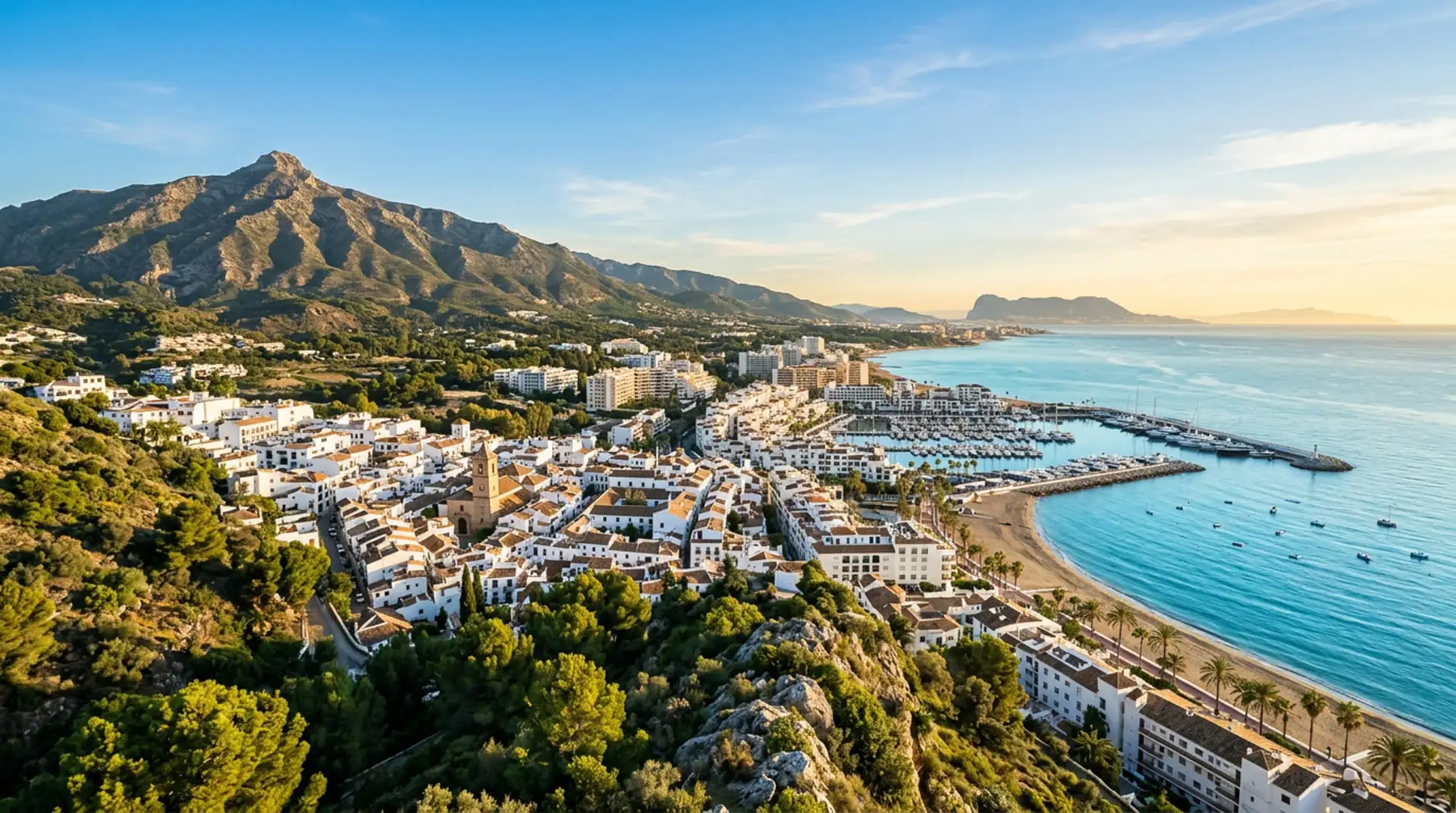
Marbella is a working city inside a luxury reputation. Behind the marinas there is an old town of whitewashed lanes around the Plaza de los Naranjos, a municipal market, schools, clinics and a hospital, and a population that stays through the winter rather than arriving for August. That is the version of the place most buyers underestimate before they visit.
The Sierra Blanca rises directly behind the town and the coast runs east to west along its foot, so the built-up area spreads as a long ribbon rather than around a single centre. That ribbon is several places with different characters: the old town and the seafront promenade, the Golden Mile running west, Puerto Banús with its marina and the residential hillsides of Nueva Andalucía behind it, and San Pedro Alcántara at the far end, with its own grid of streets, its own beach and a Spanish high street that has nothing to do with the yachts.
What you get is the most established international infrastructure on this coast: international schools, private healthcare, restaurants that open in January and neighbours who speak your language. What you accept is that the coast road carries almost all local traffic, that August changes how the town feels, and that prices reflect the reputation. Choosing Marbella without choosing which part of Marbella is choosing nothing.
The verdict
The upside is real. So is the downside. Both matter more than any brochure will admit.
The most established international infrastructure in Spain
Bilingual doctors, notaries, gestors, restaurants, sports clubs and schools. Newcomers rarely have to figure it out alone.
Mildest winter climate in mainland Europe
January averages 15 to 16°C in the day. Golf, tennis and outdoor coffee happen all year.
Direct flights to 80+ destinations from Málaga
Regular direct connections to almost every major EU capital, weekend-visit-parents distances.
A genuine city, not a resort
Real hospitals, museums, universities and year-round culture. Post-summer, it does not shut down.
Legal and tax processes buyers already understand
Most notaries and lawyers routinely handle transactions in English, Dutch, German and Swedish.
You will not become Spanish here
The expat majority in many barrios means you can happily live here for a decade without learning conversational Spanish. Some see that as the appeal. Others do not.
Summer months are hot, busy and pricey
July and August: 34°C days, restaurant prices climb, traffic on the A-7 grinds. A one-week rental in August often costs a full month in November.
Property is not cheap by Spanish standards
What buys an entry-level home in Marbella buys authentic villages elsewhere. The premium is real and buyers should know they are paying it.
Water restrictions and infrastructure strain
Costa del Sol has had chronic drought years; watering restrictions in summer are increasingly normal.
Overexposed on the international radar
The city is well-known, well-covered, well-analyzed. If discovering under-the-radar Spain is important to you, this is not it.
Editor's note
The uncomfortable truth about the alternatives to Marbella: they are often better. Not for everyone, Marbella earned its reputation for good reasons, but for a specific kind of buyer who is arriving with a preconception rather than a plan.
If you love the coast, the sun and the international scene, but you are wincing at Marbella prices, you probably want Estepona. Ten minutes west. Different only in scale.
If Marbella feels too Instagrammed to you, like everyone you know from London has been there, Nerja or Málaga will let you tell a different story. Nerja if you want a small coastal town, Málaga if you want an actual city with museums and a working port. Both are clearly cheaper.
And if what drew you was the climate but you do not need coast, look inland to Ronda, a place with dramatic geography, Roman history, and property values far below Marbella, on the same day-flight distance from Northern Europe.
Marbella is often the right answer. Just do not let it be the default one.
Málaga municipality, station: Málaga Aeropuerto (6155A), 42 km north east
Average 1981-2010 · AEMET
Updated 1 Jul 2026
INE Annual Population Census, nationality basis, 1 January 2025
Where to live and what to expect at each price point.
The Old Town. Whitewashed alleys, orange trees, tapas bars where nobody speaks English. Feels the most authentically Andalusian part of the city.

Marina, superyachts, luxury retail. Expect Ferraris, expect prices to match. Divides opinion sharply, most either love it or actively avoid it.

Golf Valley. Quiet residential blocks, deeply expat, family-oriented. Less spectacle than Puerto Banús next door, that is the point.

Between the Old Town and Puerto Banús. Marbella Club, luxury villas set back from the sea, mature landscaping. Historic-luxury tier.

Family-oriented town just west, with its own genuine local life. International schools clustered here. Less international than Nueva Andalucía, more real Spanish rhythm.

Hillside above the town. Panoramic villas, gated communities, absolute privacy. The premium end of Marbella residential, and the quietest.
Honest answers to the questions buyers actually ask.
Transfer tax rates as of August 2026. Rates are set per autonomous community and do change. Confirm the current figures with a Spanish lawyer or tax adviser before you budget.
The pros and the cons of every town, with sourced data on prices, climate and costs.
Your property search, saved cities, mortgage calculator and a step-by-step buying guide, from your first search to getting the keys.
Local agents who speak your language, and owners selling their own home, contact you about homes that fit your search.
Agents and owners ask to connect first. Your contact details are only shared with the people you accept.
Our comprehensive guide covers everything foreign buyers need to know - from NIE numbers and residency permits to mortgages and legal requirements.
Use our free mortgage calculator to estimate monthly payments, compare loan scenarios and understand the true cost of buying in Spain.